OpenClaw + Codex desktop operations

Run agent fleets with local proof, not guesswork.

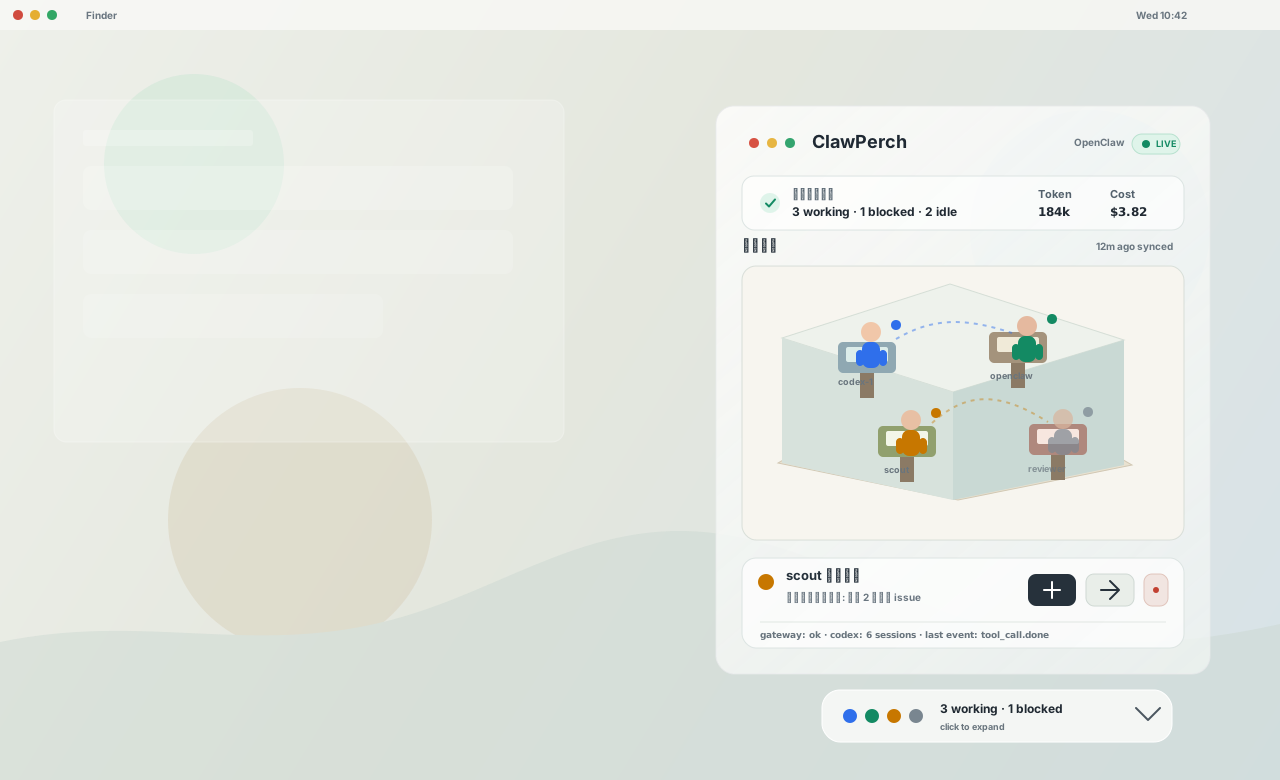
ClawPerch turns local coding-agent activity into a compact desktop mission control surface with fixture-first runtime data, guarded command previews, and release evidence that never stores raw payloads.

Release gate Phase 37 verified
Runtime mode Fixture-first
Command risk Dangerous blocked
37 completed MVP phases
0 dangerous commands enabled
1 fixture-first source of truth

Why it exists

A control plane for the part of agent work that usually hides in terminals.

ClawPerch is built for developers who run multiple agents and need fast answers: which task is blocked, which source is stale, which command is safe, and which release gate proves the current state.

Fleet scanning

Compact rows keep 20-50 agents readable while expanded context moves into a detail drawer, pipeline, and activity stream.

  • Operator status stays visible before raw source access expands.
  • Task, activity, and governance cues stay grouped by actionability.
  • Dense fleets remain scan-friendly on desktop and mobile widths.
Density 20-50 agents
Payload Metadata only
Context Drawer first
Runtime boundary

The UI consumes validated Runtime Snapshots instead of reaching into OpenClaw, Codex, filesystem scanners, or log bodies.

Evidence-first release

Phase gates document what is safe, what is blocked, and what has been verified without retaining raw command output.

Operator guardrails

Command previews, source guidance, and release evidence are presented as bounded decisions instead of hidden side effects.

ClawPerch desktop prototype showing agent status rows and mission control panels

Workflow

Start with a goal, inspect the fleet, then act through a boundary.

The operating model is deliberate: fixture data first, sanitized snapshots second, guarded command previews third. Real-source integrations stay read-only until explicit future gates unlock them.

01
Start deterministic

Run fixture mode and validate the Runtime Snapshot before inspecting source health.

02
Classify every action

Preview safe and guarded commands through the broker while dangerous commands stay blocked.

03
Ship with evidence

Use sanitized release gates to prove what changed and what remains intentionally disabled.

pnpm install
pnpm --filter @clawperch/desktop dev
pnpm verify:phase37-release-evidence-glossary-crosswalk-gate

# deterministic first run:
# fixture mode + validated Runtime Snapshot

Safety model

Useful by default. Dangerous by exception. Blocked until proven.

ClawPerch treats local agent operations like production operations: clear affordances, explicit command classes, sanitized audit metadata, and no UI shortcuts around the runtime boundary.

Command Broker states

Operator actions are classified before execution. Unknown and dangerous command IDs are blocked and audited with sanitized metadata.

Safe Previewable actions with bounded behavior and sanitized audit rows.
Guarded Requires explicit approval and fresh Runtime Snapshot context.
Dangerous Always blocked in the current MVP; no shell escape hatch.

Release evidence

Phase 37 closes the loop between terms, gates, and reviewer evidence.

The latest slice adds a static glossary crosswalk so reviewers can map runtime, scanner, command, privacy, metadata, and handoff terms back to the exact evidence surfaces that prove them.

Static metadata only

Input Checked-in release JSON
Output Read-only Settings evidence
Blocked No raw payload, log, command, or local file retention

Gate chain

Latest Phase 37 glossary crosswalk gate
Upstream Phase 28 through Phase 14 release gates
Boundary Runtime/source/command/scanner expansion remains blocked

Local-first MVP

Clone, install, run fixture mode, then inspect the evidence.

The current MVP is intentionally conservative: it proves the control surface and release gates before broad real-source access.

Start from README